

What checks apply to private foster carers?
Private foster carers are assessed by the local authority, which normally carries out DBS and other suitability checks on the proposed carer and relevant household members. The assessment can also cover health, home conditions, relationships, references and the carer’s ability to meet the child’s needs safely.
Partnering with an
Ofsted Outstanding Provider
Checks on a private foster carer are safeguarding checks carried out by the local authority before, and during, a private fostering arrangement. They are designed to help the authority decide whether the proposed arrangement is suitable and whether the child will be cared for safely. This is a local authority assessment, rather than the same approval process used for mainstream foster carers.
The assessment usually considers the following areas:
- Identity and background: the local authority will establish who the proposed carer is and make the relevant statutory enquiries. This can include checks with the police and the Disclosure and Barring Service (DBS).
- Other household members: people living in the home may also be checked, particularly adults and older children whose circumstances could affect the child’s safety. The authority needs to understand who has regular access to the child, not just who is named as the carer.
- Health: the carer may be asked for health information or consent for enquiries to be made. The issue is not whether someone has perfect health, but whether any condition could affect their ability to provide consistent, safe care.
- Home and accommodation: the authority will look at whether the property is suitable for the child, including sleeping arrangements, general safety, privacy and the availability of appropriate space.
- Caregiving ability: the assessment considers whether the proposed carer understands the child’s needs and can provide suitable supervision, routines, boundaries and day-to-day care.
- Family and household relationships: the local authority may explore how the arrangement came about, the relationship between the carer and the child’s parents, and whether there is any conflict or pressure that could affect the child.
- References and relevant information: people who know the carer may be contacted, and information held by other agencies may be considered where it is relevant to safeguarding or the child’s welfare.
A DBS check is an important part of the process, but it does not by itself determine whether someone can privately foster a child. A criminal record will be considered in context. The authority may look at the nature of an offence, how long ago it occurred, whether there has been any pattern of behaviour and how relevant it is to caring for a child. Some information, particularly offences involving violence, abuse or children, may create a serious barrier, but the local authority must consider the overall circumstances and the child’s best interests.
The authority will also consider information about the child. This can include the child’s age, development, health, education, communication needs, cultural or religious background and any additional support they require. A home that may be suitable for one child may not be suitable for another, so the assessment is specific to the proposed arrangement.
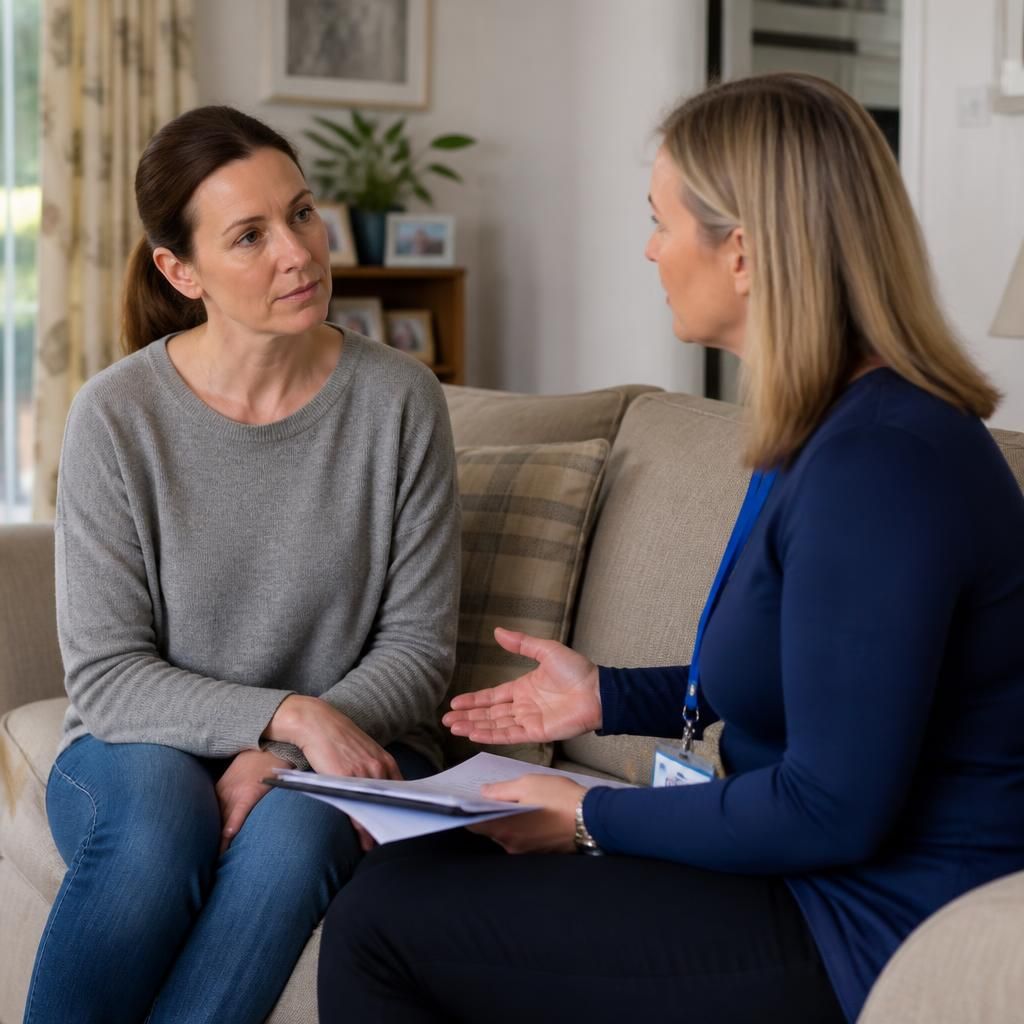
As part of its enquiries, a social worker will normally speak with the proposed carer and may speak with household members separately. The child’s views should be taken into account in a way that is appropriate to their age and understanding. Where suitable, the social worker may speak with the child privately so that they can express their views without feeling influenced by an adult.
Checks do not necessarily end once the child moves in. The local authority has continuing duties in relation to private fostering arrangements. It may visit the home, speak with the child and carer, check that the agreed arrangements remain suitable and liaise with professionals such as the child’s school or health services when necessary. The carer should tell the authority about significant changes, such as a change of address, a new person joining the household or a change in the child’s circumstances.
The outcome may be that the arrangement is considered suitable, that additional safeguards are needed, or that the authority cannot support the arrangement in its proposed form. Conditions or practical recommendations might relate to sleeping arrangements, supervision, contact with parents, healthcare, education or support from other services. If the authority believes the child is at risk of harm, it must take appropriate child protection action rather than treating the matter as a routine private fostering assessment.
Private foster carers should cooperate fully with the enquiries and provide accurate information. Delays or difficulties with checks do not automatically mean that an arrangement cannot proceed, but the local authority needs enough reliable information to assess safety. If circumstances change after the assessment, the authority may need to carry out further checks or reconsider whether the arrangement remains suitable.
The exact process can vary according to the child’s needs and the local authority’s procedures. Anyone planning to care for a child in a private fostering arrangement should contact the relevant local authority children’s services department as early as possible, so that the necessary checks and safeguarding assessment can be arranged before the child comes to live with them.
Checks are assessed against the proposed arrangement, not against a fixed checklist that produces an automatic pass or fail. The local authority considers whether the information it has obtained is sufficient to understand any risks and whether those risks can be managed safely for this particular child.
If relevant information is missing or cannot be verified, the social worker may ask for further evidence before reaching a view. This could include clarification about previous addresses, household circumstances or the proposed care arrangements. Giving complete and accurate information helps the authority make a properly informed safeguarding decision.
Need help understanding private fostering checks?
If caring for a child has prompted you to consider becoming an approved foster carer, contact Become A Foster Family for guidance on the assessment process, training and support available.