

How are group homes for foster youth staffed?
Group homes for foster youth are usually staffed by trained residential childcare workers who provide supervision, practical support and day-to-day care. Senior practitioners or managers oversee the team, while staff work to agreed care plans and safeguarding procedures so support is consistent for each young person.
Partnering with an
Ofsted Outstanding Provider
Group homes for foster youth are staffed through a planned team structure that matches the number, ages and individual needs of the young people living there. The staffing plan normally sets out who is on duty, who leads the shift, what specialist input is available and how cover is maintained during sleep-in or waking-night periods.
The main roles may include:
- Residential childcare workers , who support routines, school or college attendance, appointments, activities, communication and independent-living skills.
- Senior residential workers or shift leaders , who coordinate the staff on duty, allocate tasks, respond to concerns and make sure important information is passed on.
- A registered manager , who is responsible for the home’s day-to-day operation, staff performance, records, quality of care and compliance with relevant requirements.
- Deputy managers or team leaders , who provide additional management cover and help maintain consistency between shifts.
- Specialist professionals , such as social workers, health professionals, education staff or therapists, who contribute to a young person’s plan without necessarily being permanently based in the home.
Staffing levels are not decided solely by the number of beds. Managers consider each young person’s assessed needs, communication style, mobility, health, emotional wellbeing, behaviour, relationships with others and any known risks. They also consider whether young people can safely share the same environment and whether one resident may need additional individual support. This means staffing arrangements can change when circumstances change, following a review, incident or new information.
Many homes organise continuous cover through a rota. This can involve staff working daytime and evening shifts, alongside a sleep-in arrangement or waking-night staff where the young people’s needs require it. The exact arrangement depends on the home’s assessment of risk and the level of supervision required. A manager or designated senior person will usually be available to guide staff when an important decision, safeguarding concern or emergency arises.
Before working directly with young people, staff should go through recruitment and suitability checks. These commonly include identity checks, references, employment history, criminal-record checks where required, and an assessment of whether the applicant is suitable to work with children. Recruitment should also explore how a person handles boundaries, conflict, confidentiality, safeguarding and behaviour that may be distressing or challenging.
Induction helps new staff understand the home’s policies, the young people’s care arrangements, recording systems, emergency procedures and professional boundaries. Ongoing learning may cover safeguarding, first aid, medication, de-escalation, trauma-informed care, communication needs, equality and safer working practices. Training should be refreshed and extended when a young person’s needs indicate that more specific knowledge is necessary.
Good staffing is also about consistency, not simply having enough people present. Each shift should receive a clear handover, and staff should record significant events, concerns, appointments, incidents and decisions accurately. Regular supervision gives workers an opportunity to reflect on practice, identify further training needs and consider whether the current arrangements remain suitable.
Staff normally work with the wider professional network rather than making decisions in isolation. Depending on the young person’s circumstances, this may include their social worker, foster or family contacts, school, health professionals, independent reviewing officer and advocates. Information should be shared lawfully and proportionately, with the young person involved in decisions wherever possible.
Using temporary or agency workers can create a continuity challenge, so homes need clear procedures for checking their suitability, explaining house routines and sharing essential information before they work with residents. A well-managed home will aim to keep familiar adults involved, while ensuring that any replacement worker understands the young person’s needs, boundaries and safety arrangements.
For someone considering fostering, it is useful to distinguish a group home from a foster placement. A group home has a rota-based residential team and shared management structure, whereas a foster placement is provided by approved foster carers in their own home. Both settings should provide individually planned care, safeguarding oversight and support from relevant professionals, but the staffing model and daily responsibilities are different.
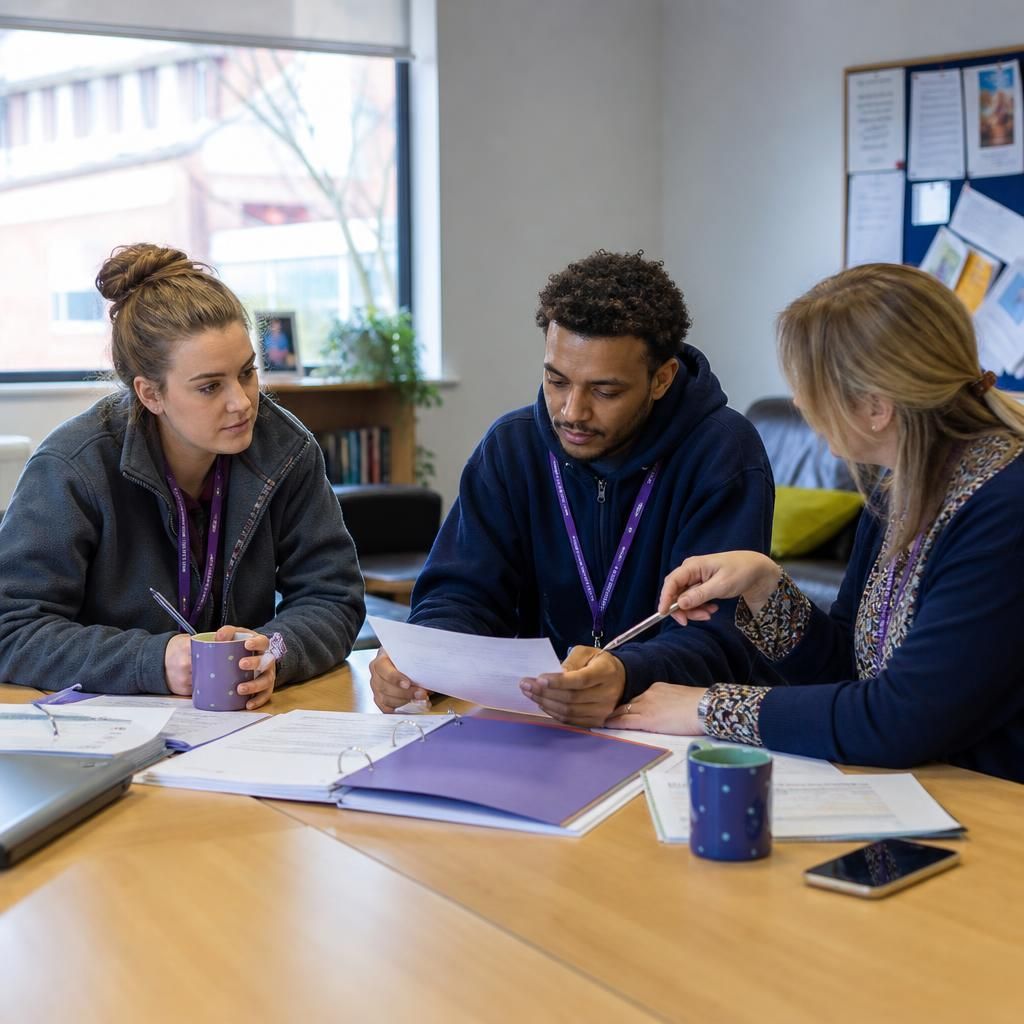
Staff in a group home should do more than supervise routines: they should help each young person understand what is happening, take part in decisions and feel able to raise concerns. Workers should introduce themselves clearly, explain their role and communicate in a way that suits the young person’s age, understanding and communication needs.
Professional boundaries are important because residential staff may become familiar adults in a young person’s daily life. Staff should be approachable without becoming over-involved, respect personal information and respond consistently when a young person is upset or disagrees with a decision. A young person should also know which member of staff they can speak to about their care, relationships, education or worries, and how to access independent advocacy when needed.
Ask about staffing in group homes for foster youth
If you are considering fostering, speak to Become A Foster Family to learn how the responsibilities of foster carers differ from residential group-home roles and what the application process involves.