
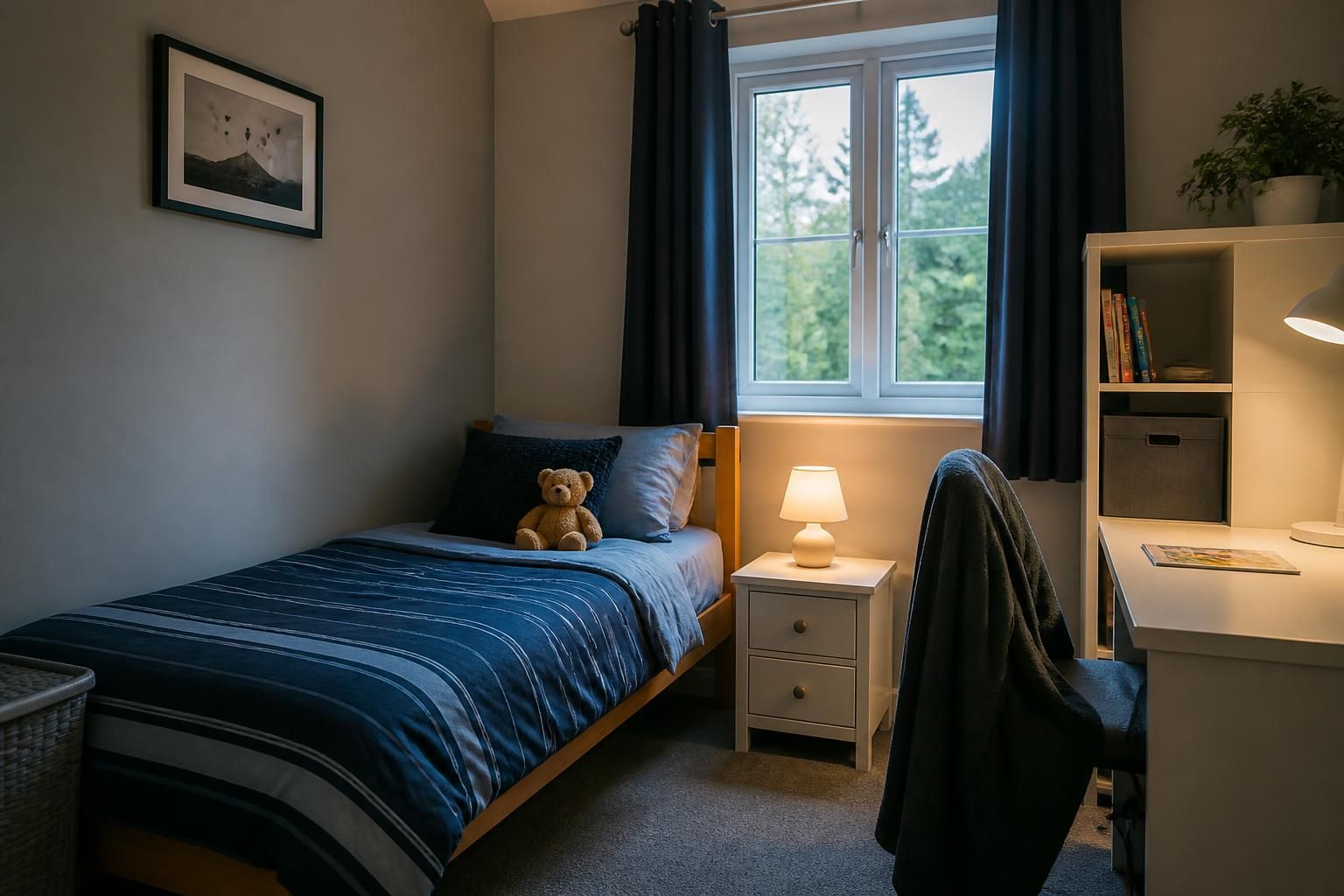
Does a respite foster child need their own bedroom?
Usually, yes: a respite foster child should have their own bedroom, with suitable space, privacy and furnishings. Bedroom-sharing may only be considered where the fostering service has assessed it as safe and appropriate for the children involved, taking account of their ages, relationship and individual needs.
Partnering with an
Ofsted Outstanding Provider
A respite foster child will generally need a suitable bedroom available for their stay. The room must provide a safe, private and appropriate place to sleep, store belongings and spend quiet time. A spare room does not have to remain permanently unused between placements, but it should be prepared and ready before a child arrives.
The fostering service will assess whether the proposed bedroom is suitable as part of the wider home assessment. This includes considering:
- the room’s size, condition, ventilation, heating and natural light;
- whether the child can access it safely, including at night;
- the bed, bedding, storage and other furnishings provided;
- privacy, door and window safety, and the location of the room within the home;
- any health, mobility, sensory, developmental or behavioural needs;
- the ages, sex, relationships and needs of other children living or staying in the household; and
- whether the proposed arrangement fits the household’s safer caring plan.
A child should not be expected to sleep on a sofa, in a communal living area or in an unsuitable temporary space. Sleeping arrangements should also avoid unnecessary contact with unrelated household members and give the child a clear sense of where they can go for privacy. The room should be free from hazards, with medication, cleaning products, weapons and other restricted items stored securely elsewhere.
Room-sharing is not automatically ruled out in every situation, but it cannot be decided by the foster carer alone. The fostering service must consider whether it is safe and appropriate for the particular children. Factors may include their ages, existing relationship, wishes, personal history, vulnerabilities, ability to settle at night and any safeguarding concerns. A child who is visiting for respite may have information in their care plan that makes sharing unsuitable, even where two children appear to get along.
For a short respite stay, practical preparation is still important. Before the placement begins, the foster carer should know which room the child will use and check that it contains:
- a suitable bed and clean bedding;
- space for clothes, toiletries and personal possessions;
- appropriate lighting, including a night light if required;
- safe access to the bathroom and other areas of the home;
- age-appropriate furnishings and any agreed equipment; and
- information the child may need, such as household routines and what to do if they wake during the night.
Some children may need more than standard furniture. For example, a child with mobility needs may require accessible space, specialist equipment or a bedroom on a particular floor. A child who is anxious, has experienced trauma or has difficulty sleeping may need an agreed bedtime routine and additional reassurance. These arrangements should be discussed with the supervising social worker and the child’s placing authority before the stay, rather than being worked out after arrival.
If your household does not have a suitable spare bedroom, tell the fostering service at the initial enquiry or assessment stage. The assessment will establish what types of respite placements could safely be considered. Do not agree to a placement on the assumption that an exception can be made without written confirmation and professional approval.
The bedroom is only one part of the decision. The service will also consider the whole household, supervision arrangements, contact with birth family where relevant, pets, visitors, transport and how the child’s routines will be maintained. A respite placement should be accepted only when the accommodation and the wider care plan are suitable for that individual child.

The bedroom arrangement for a respite placement should be agreed as part of the child’s matching and care planning, rather than treated as a standard rule that applies in exactly the same way to every child. Information from the child’s social worker can identify circumstances that affect where they sleep, including fears, previous experiences, relationships with other children and any need for particular boundaries.
Before accepting the placement, discuss any concerns with your supervising social worker and check that the proposed arrangement is recorded in the child’s plans. This gives everyone a shared understanding of:
- which bedroom the child will use;
- who may enter the room and when;
- how the child can ask for help or privacy; and
- what changes should be made if the arrangement is not working.
For a respite stay, this planning is important because the child may already have established routines in another foster home. Consistency between households can help them understand the arrangement and settle more easily.
Talk to us about respite foster bedroom requirements
If you are considering respite fostering, speak to our fostering team about your household and the types of placements that may be suitable. We can explain the assessment process and help you understand the practical requirements before you decide whether to apply.