
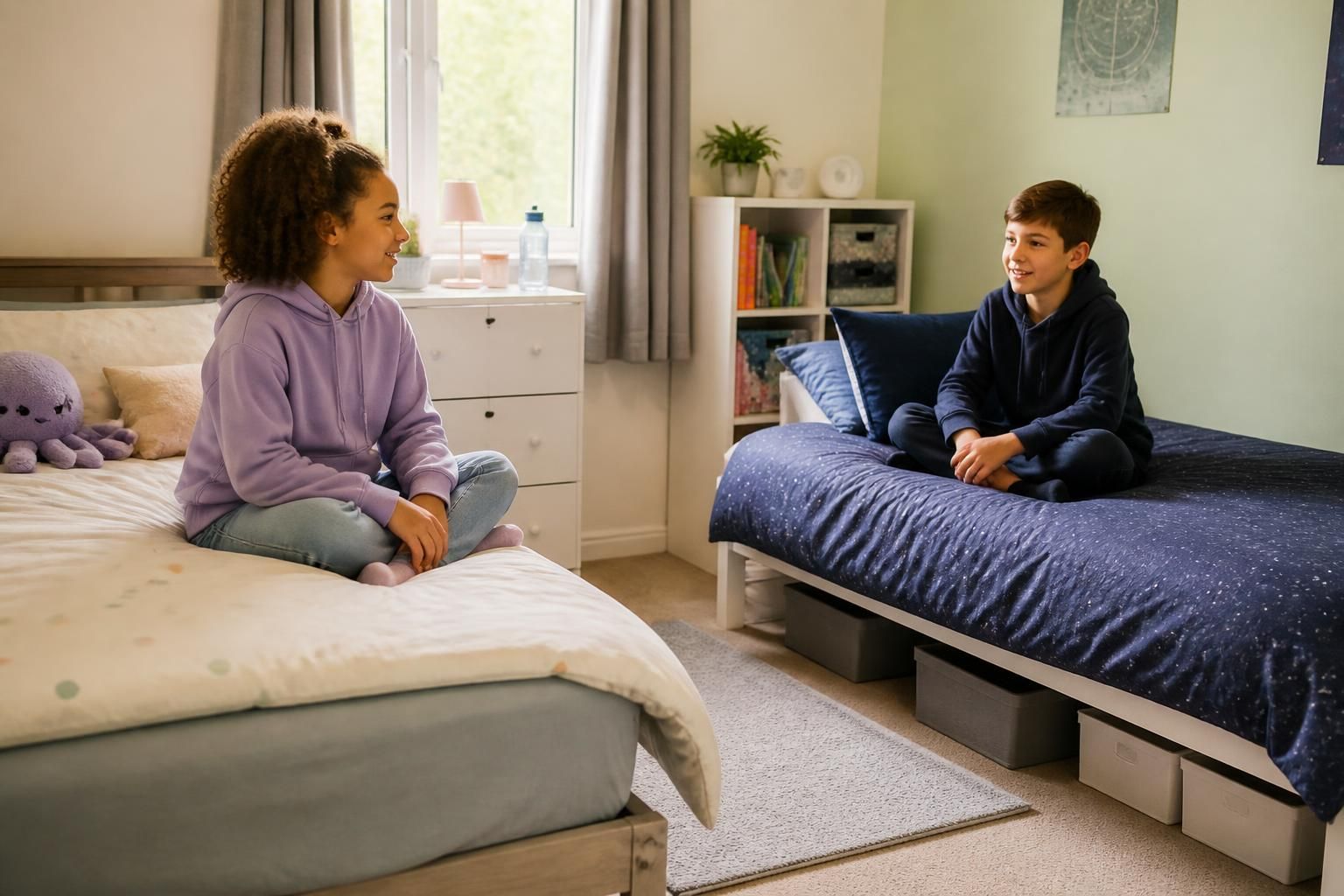
Do siblings need separate bedrooms in foster care?
No, siblings do not always need separate bedrooms in foster care. They may share if this is safe and suitable for each child, taking account of their ages, sex, individual needs, wishes and any safeguarding concerns; separate rooms may be recommended where sharing could affect their wellbeing.
Partnering with an
Ofsted Outstanding Provider
Separate bedrooms are not an automatic requirement for siblings in foster care. A shared bedroom can be considered where the arrangement is safe, suitable and in the best interests of each child, but the decision must be based on an individual assessment rather than on the fact that the children are related.
Before a sibling placement is agreed, the fostering service will consider the children’s ages, developmental stages, sex, personalities, routines and relationship with one another. It will also look at any information about trauma, abuse, bullying, sexualised behaviour, sleep difficulties, medical needs or conflict between the children. These factors may mean that sharing is unsuitable, even when the siblings have a close relationship.
The children’s views are important. Their wishes and feelings should be considered in an age-appropriate way, particularly if one child is worried about sharing. Younger children may need help to express their views, while older children will generally have a clearer understanding of privacy and personal space. A sibling placement should not assume that every child wants the same arrangement.
A bedroom used by siblings must provide a suitable environment for both children. Each child should have an appropriate bed and enough space for their belongings, with arrangements that respect privacy and personal care. The room should also be suitable for the children’s ages and needs, including any mobility, sensory or health requirements. Foster carers should discuss practical arrangements with their assessing social worker rather than relying on informal assumptions about what is acceptable.
There are particular reasons why separate rooms may be recommended, including:
- a significant difference in age or developmental maturity;
- concerns about one child’s behaviour or the safety of another child;
- previous experiences of abuse, exploitation or inappropriate contact;
- serious disruption to sleep or emotional wellbeing;
- different medical, disability or sensory needs;
- persistent conflict, intimidation or distress between the siblings; or
- a child’s strong and consistent wish for greater privacy.
These considerations do not necessarily prevent siblings from being fostered together. They may instead affect the matching decision, the layout of the placement or the support and supervision needed. In some cases, siblings may share initially and move to separate rooms if their needs change. In others, separate rooms may be needed from the beginning while the children still live in the same foster home.
During the fostering assessment, the agency will consider the bedrooms available in your home, who else lives there and which types of placements could be suitable. This assessment forms part of a wider review of your household, including your ability to provide privacy, boundaries, supervision and consistent care. You should be open about the space available and any limitations, so that potential placements can be matched safely.
Foster carers are not expected to decide alone whether siblings should share. The child’s social worker, fostering service and other relevant professionals should discuss the arrangement with you and explain the reasons for the decision. If the placement goes ahead, carers should observe how the children manage sharing and report concerns, changes in behaviour or signs of distress.
Bedroom arrangements can be reviewed after the children move in. A child may become more aware of their need for privacy, or information may emerge about their history and relationship that was not known before placement. If sharing becomes unsuitable, the fostering service should consider what changes are needed, which may include separate sleeping arrangements, additional support or a review of the wider placement plan.
If you are considering fostering siblings, having separate bedrooms may give you more flexibility, but it does not by itself determine whether you can offer a sibling placement. The key question is whether the home can provide each child with a safe, appropriate and stable place to sleep, alongside the supervision and support required for their individual needs.
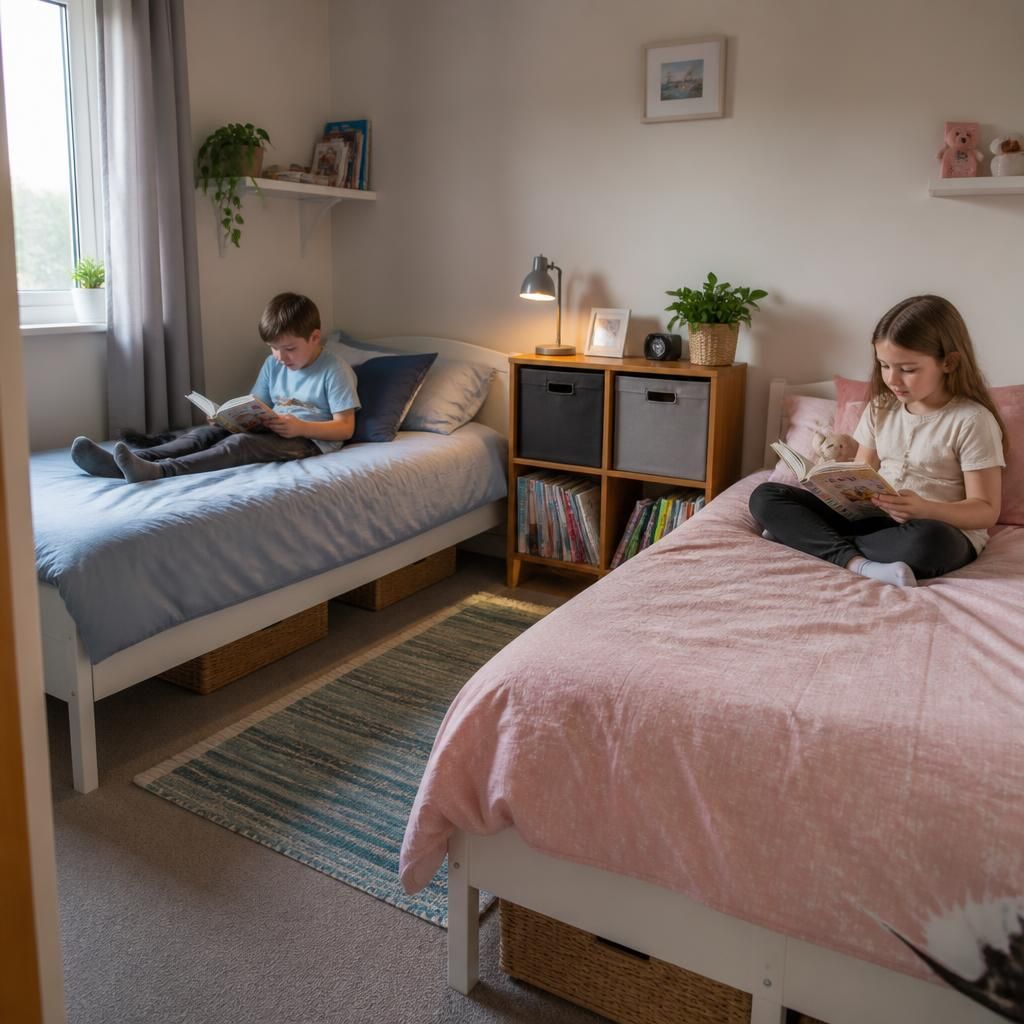
When siblings share a bedroom in foster care, the arrangement should include clear plans for privacy, personal space and boundaries—not simply two beds in one room. These details help children understand what they can expect and give foster carers practical ways to identify concerns.
- Provide each child with their own storage for clothes, belongings and private items.
- Agree respectful arrangements for changing clothes and using personal care items.
- Establish bedtime routines that take account of different ages, sleep patterns and comfort needs.
- Make sure each child has a way to ask for time alone or report feeling uncomfortable.
- Check regularly, in an age-appropriate way, how each child feels about the arrangement.
These arrangements should be discussed with the supervising social worker and included in the placement plan where appropriate. A practical bedroom plan can help a shared room work safely while ensuring that each child’s individual boundaries are recognised.
Discuss bedroom arrangements for sibling placements
If you are considering fostering siblings, speak to our fostering team about your home layout and how bedroom arrangements would be assessed. They can explain the next steps and help you understand what information is needed during your fostering assessment.