

Can disabled single parents become foster carers?
Yes. Disabled single parents can become foster carers if an assessment finds they can meet a child’s needs safely and consistently; the assessment considers your health, daily routines, accessibility needs, parenting capacity and the practical support available to you.
Partnering with an
Ofsted Outstanding Provider
Disabled single parents can become foster carers. Disability is not an automatic reason for refusal; the key consideration is whether you can provide safe, consistent and appropriate care for a child, with suitable arrangements for any support or adaptations you need.
During the fostering assessment, your disability will be considered individually rather than treated as a label. The assessment may explore:
- how your condition affects mobility, energy, concentration, communication or day-to-day activities;
- whether you can respond safely to a child’s needs, including appointments, school matters, contact arrangements and unexpected situations;
- how your health is managed and whether it is stable enough for fostering;
- any equipment, home adaptations or communication adjustments that would help;
- who can provide practical or emergency support if you are unwell or temporarily unable to manage alone; and
- how fostering would fit alongside your responsibilities as a parent.
This does not mean you must be able to do everything without assistance. Many people manage a disability through treatment, equipment, personal assistance, flexible routines or support from relatives and friends. The important point is that the arrangements must be realistic, dependable and suitable for the child placed with you. A support network should understand what may be required and be willing to help in practical ways, rather than being only a general offer of assistance.
A medical assessment forms part of the fostering process. You may be asked for information from your GP or another relevant healthcare professional so that the fostering service can understand your health needs and identify any safeguards or adjustments. You should explain the effect of your condition honestly, including any fluctuating symptoms, fatigue, pain, mental health needs or periods when your capacity is reduced. This is not intended to exclude you; accurate information helps the agency plan safely and make an informed recommendation.
Your home will also be considered. A wheelchair-accessible layout is not automatically required, but the household must be safe and appropriate for the age and needs of the child. Possible considerations include access between rooms, stairs, bathroom facilities, medication storage, moving and handling, fire safety and whether there is enough space and privacy. Reasonable adaptations may be discussed where they would make fostering practical and safe.
As a single parent, you will need to show how care will continue if you have a hospital appointment, a flare-up, an accident or another situation that affects your availability. This might involve agreed support from family, friends, a partner who does not live with you, or other suitable people. The agency will examine the reliability and suitability of those arrangements, while recognising that support should not replace your role as the primary carer.
The application process normally includes initial discussions, checks, references, a home assessment, preparation training and a detailed assessment of your circumstances. You can ask for adjustments during the process, such as accessible information, additional time, breaks, a different meeting format or support with communication. Tell the fostering team what would enable you to take part fully so that the assessment measures your suitability to foster rather than the effect of an avoidable access barrier.
Training and ongoing support can help you plan for the practical aspects of fostering. This may include understanding trauma and behaviour, safer caring, working with schools and professionals, managing appointments, maintaining boundaries and responding to a child’s changing needs. Become a Foster Family provides guidance, training, financial support and ongoing assistance, which can be discussed in relation to your particular circumstances.
Financial support is intended to help foster carers meet the costs of caring for a child, although you should ask for current information about allowances and any effect on your existing benefits or arrangements. It is also sensible to discuss the cost of equipment, transport, adaptations, childcare or additional support before applying.
The outcome will depend on the full assessment, including your health, parenting experience, home, support arrangements and ability to meet the needs of a particular child. If one type of placement would not be suitable, the assessment may identify other ages or needs that could be considered. A disability alone should not determine the decision; the focus is on safe, sustainable and child-centred care.
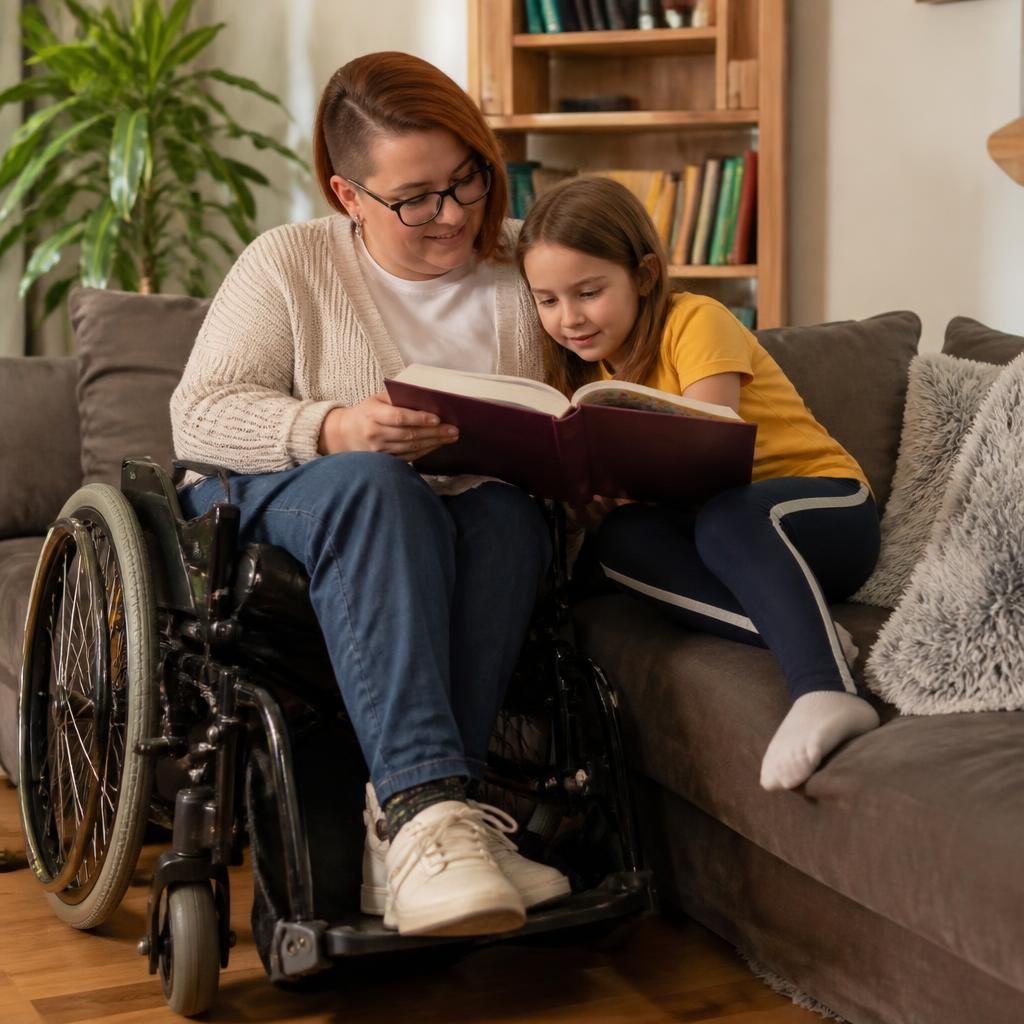
Fostering services must not treat disability as an automatic barrier. Under equality law, disabled applicants should be assessed fairly and any decision should relate to their ability to meet a child’s needs, rather than relying on assumptions about a diagnosis or impairment. The assessment should explain the evidence behind its recommendation and distinguish between a genuine care-related risk and an access barrier that could be addressed through an adjustment.
If you feel your disability has been misunderstood, ask the assessing social worker to record your practical abilities, the arrangements you use and the evidence supporting your answers. You can also ask how any concerns will affect the types of placements considered. Clear, specific information helps ensure the decision is based on your individual circumstances and the welfare of the child.
Discuss fostering as a disabled single parent
Discuss your circumstances with Become a Foster Family to understand the assessment process and the practical arrangements you may need as a disabled single parent. The fostering team can explain the next steps and help you decide whether to begin an application.