

How are family traditions balanced with a child’s identity in single parent fostering?
In single parent fostering, family traditions should be shared in ways that respect and strengthen the child’s own identity, rather than replacing their culture, religion, language or personal history. A foster carer can include a child in household traditions while working with them, their birth family and professionals to maintain meaningful connections to their background.
Partnering with an
Ofsted Outstanding Provider
Family traditions in single parent fostering should be offered as an invitation, not imposed as a replacement for the child’s existing identity. The practical balance is to keep household routines that provide security while adapting celebrations, food, religious observance, language and everyday customs around the child’s wishes, care plan and connections with their birth family.
A single parent does not need to remove their own traditions from family life. Familiar routines can help a child understand what to expect and feel included in the household. However, fostering is different from bringing a child into a family with no previous history. The child may already have important cultural, religious or family practices, even if they have not been able to follow them consistently. Their identity should therefore be explored before decisions are made about which traditions to introduce or continue.
Start with the child’s individual identity
Identity is personal and cannot be decided from a child’s ethnicity or family background alone. Two children from the same community may have different religious beliefs, languages, food preferences, family relationships and views about celebrations. A child may also identify with several cultures or may feel uncertain about how they describe themselves.
Useful questions include:
- Which people, places, languages and activities are important to the child?
- Are there religious or cultural practices they want to continue?
- Which celebrations do they enjoy, and which might make them uncomfortable?
- What foods, clothing, music, stories or objects connect them with home?
- How do they want their background to be discussed with friends, school or extended family?
The child’s age, communication needs and level of understanding will affect how these conversations take place. A younger child may express preferences through play or behaviour, while an older child may be able to explain exactly which traditions matter to them. Their views should be revisited because identity and confidence can develop during a placement.
Agree what will be shared and what will be protected
Some household traditions can be shared naturally. A single foster parent might invite a child to help prepare a familiar family meal, take part in a seasonal celebration or learn about a tradition through stories and music. The child should be able to say no without being criticised or made to feel disloyal.
Other practices may be private, sacred or closely linked to the child’s birth family. These should not be treated as activities for the whole household without the child’s agreement. A child may want to observe a religious practice alone, speak their home language with relatives or keep particular photographs and belongings in a private place. Respecting those boundaries is part of supporting their identity.
It is also important to avoid presenting one family’s customs as the normal or correct way to live. Explaining that different families mark events in different ways allows a child to participate without feeling that their background is being judged.
Work with the birth family and professionals
Where it is safe and appropriate, the child’s birth family can provide valuable information about traditions, pronunciation, recipes, religious observance, significant dates and important relationships. This information should be handled sensitively. A foster carer should not make promises about contact or arrangements independently, particularly where these need to follow the child’s care plan.
The supervising social worker, child’s social worker and other relevant professionals can help clarify what has been agreed. The placement plan may cover matters such as faith, diet, clothing, hair care, language, celebrations, contact and access to community activities. If the child’s wishes differ from an adult’s preference, the reasons should be discussed rather than assuming that either view automatically settles the issue.
For some children, maintaining identity may involve regular contact with relatives, attendance at a place of worship, access to culturally familiar services or opportunities to meet people with similar backgrounds. For others, these arrangements may be unwanted or may need to be introduced gradually. The right approach depends on the child’s history, safety, wishes and assessed needs.
Make everyday routines inclusive
Balance is usually created through ordinary decisions, not only major festivals. Practical steps may include:
- checking ingredients and offering suitable alternatives where food is restricted by faith, culture, allergy or preference;
- learning how to pronounce the child’s name correctly and using the name they choose;
- supporting appropriate hair, skincare and clothing routines, including seeking advice when the carer’s own experience is limited;
- displaying books, music, artwork and resources that reflect the child without reducing their identity to a theme;
- allowing the child to keep meaningful objects and photographs safely;
- recognising important dates from the child’s background as well as the household’s usual celebrations; and
- giving the child language to explain their family and background in a way that feels comfortable to them.
These steps should not become a performance for visitors or a requirement for the child to educate the foster parent. A single parent can ask for guidance, use approved training and involve professionals or trusted community resources where appropriate. The responsibility for creating an inclusive home remains with the adult, not the child.
Consider the single parent household
A single parent may have established routines without another adult in the home to share decisions or compare perspectives. This can make consistency easier in some areas, but it can also mean that the carer needs deliberate opportunities to reflect on assumptions. Discussing proposed traditions with a supervising social worker, support network or foster carer group can help identify whether a plan genuinely includes the child or simply expects the child to fit in.
Household boundaries still matter. A child should not be allowed to disregard agreed safety rules because a practice is described as cultural, and a foster carer should not reject a child’s practice simply because it is unfamiliar. Concerns should be raised through the fostering team so that safety, parental responsibility and the child’s identity can be considered together.
Review the arrangement as the placement develops
The balance may change as the child becomes more settled, begins to trust the carer or reaches a new stage of development. A tradition that initially feels unfamiliar may later become enjoyable, while a child who once wanted to take part may later prefer more distance. Regular discussions and placement reviews should consider whether the child feels respected, whether their relationships and identity are being maintained, and whether any part of family life is causing pressure.
Good fostering practice does not require a single parent to have identical traditions to a child. It requires openness, flexibility and a willingness to make practical changes. A household can retain its own character while giving the child genuine choice, accurate recognition of their background and room to develop an identity that includes their past, present relationships and future choices.
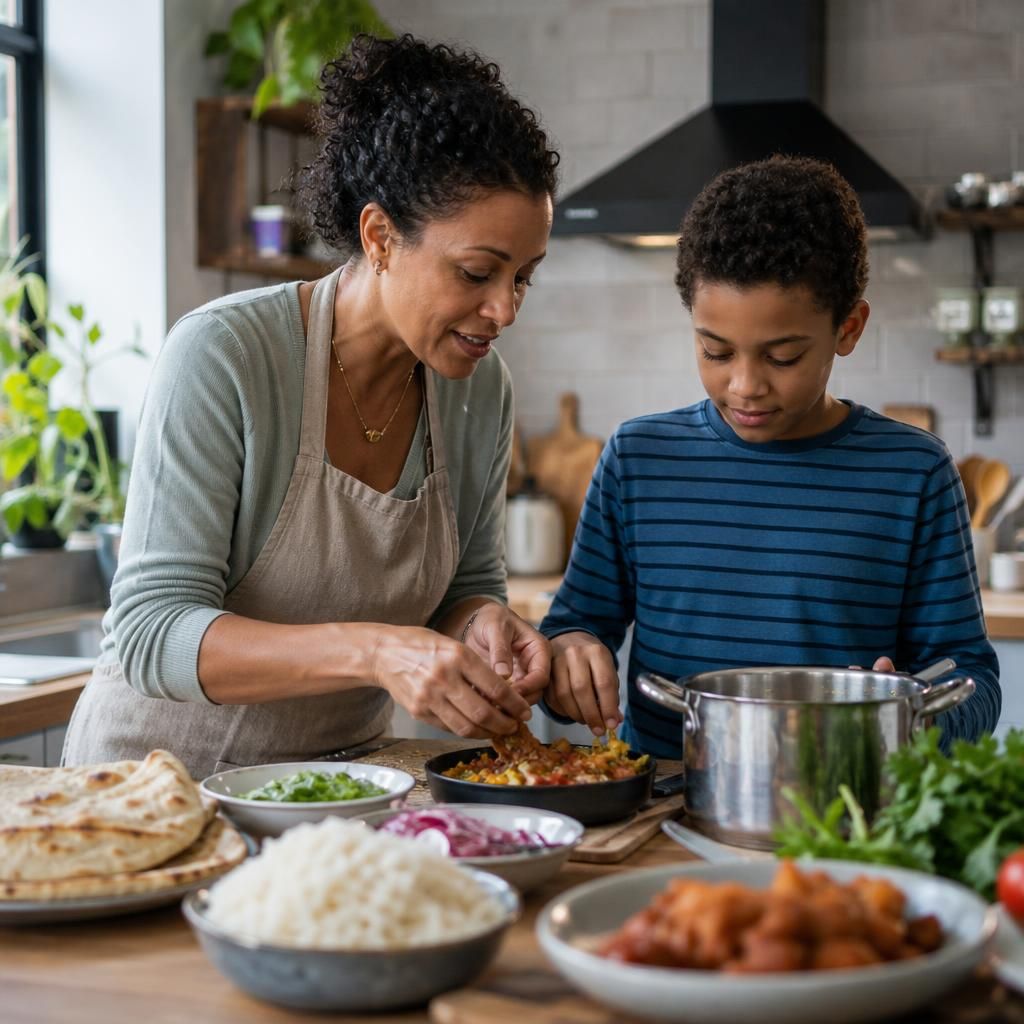
Balancing family traditions with a child’s identity also means avoiding loyalty conflicts. A child should not feel that enjoying a foster family’s customs is a rejection of their birth family, or that maintaining familiar practices is disloyal to the household they live in.
Use neutral, inclusive language when discussing celebrations and routines. For example, describe a household event as “something we do here” rather than expecting the child to describe it as their own tradition. If a child has important dates, customs or relationships connected to another household, acknowledge their significance without asking the child to compare families or choose one identity over another.
This approach is particularly important around birthdays, religious festivals, family visits and school events, when children may experience mixed feelings. Give them time to explain what each occasion means to them, record agreed arrangements clearly, and check afterwards whether anything felt uncomfortable. A child’s identity can include new experiences alongside earlier relationships; fostering should make room for both.
Talk to us about fostering as a single parent
Talk to us about fostering as a single parent to discuss your circumstances, ask questions about the assessment process and understand the support available.