
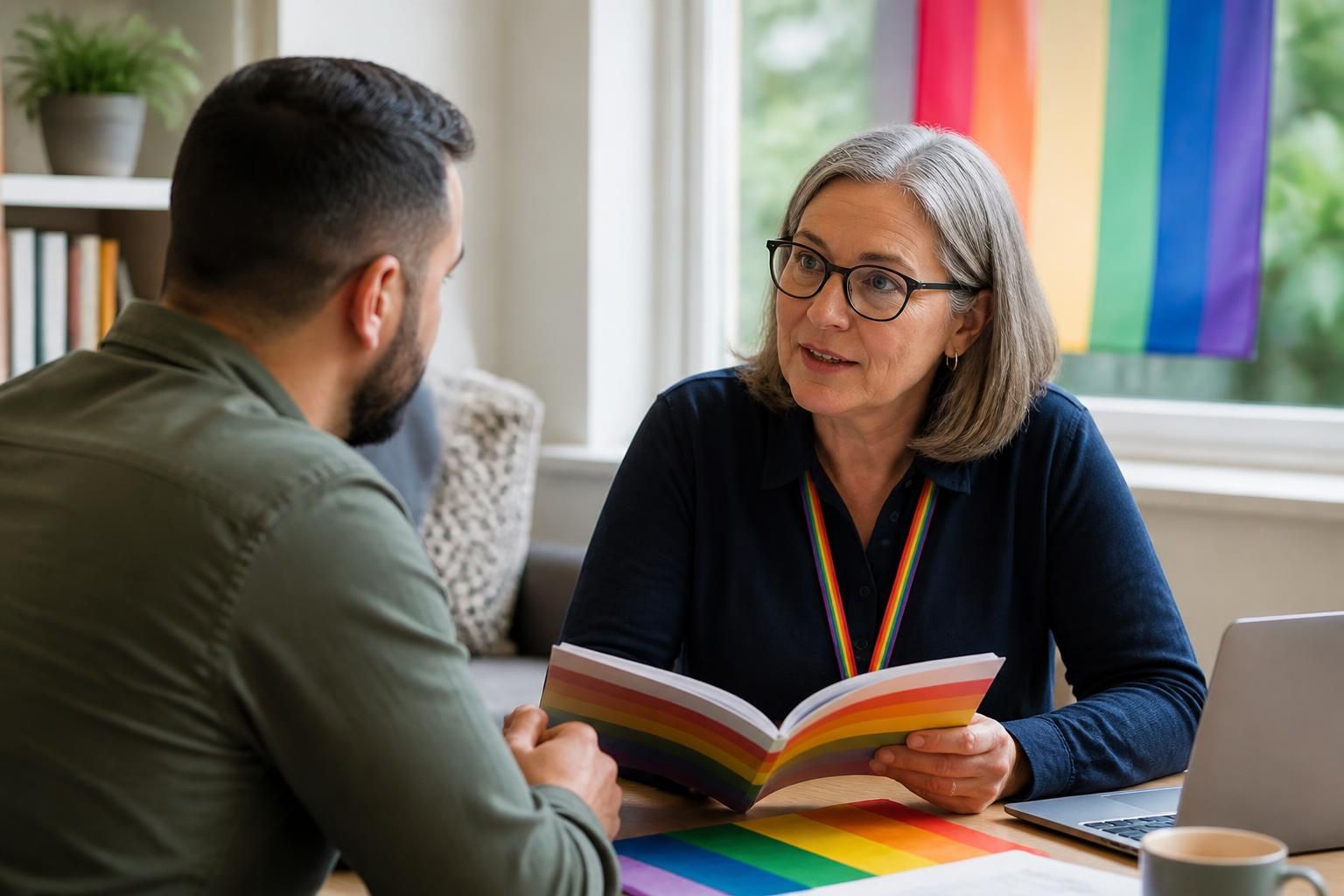
What training do carers receive for LGBTQ+ specialist foster care?
Foster carers receive preparation and ongoing training covering LGBTQ+ inclusive practice, identity and expression, safeguarding, confidentiality, and how to provide practical and emotional support. Training also helps carers recognise the effects of discrimination, trauma or rejection and respond in a way that respects each young person’s individual needs.
Partnering with an
Ofsted Outstanding Provider
Training for LGBTQ+ specialist foster care normally combines the standard preparation required of all foster carers with additional learning focused on the needs of LGBTQ+ children and young people. It is designed to help applicants make informed decisions about fostering, demonstrate that they can provide safe and consistent care, and continue developing their skills after approval.
Before approval, preparation usually covers:
- the role and responsibilities of a foster carer, including working with the fostering service, social workers, schools and health professionals;
- how fostering affects everyone in the household and how household members can contribute to a stable placement;
- children’s development, behaviour and attachment, including how previous experiences may affect trust, communication and relationships;
- safe caring arrangements, professional boundaries, recording information and sharing concerns through the correct channels;
- the assessment and approval process, including how applicants’ skills, circumstances and support networks are considered; and
- how to work constructively with birth families and other people who are important to the child.
The LGBTQ+ specialist element builds on this foundation. It may use case studies, group discussion, guided exercises and practical scenarios to examine how a carer’s words, assumptions, household routines and responses can affect a young person’s sense of safety. The focus is not on expecting carers to have every answer, but on developing the ability to listen, ask respectful questions, seek appropriate advice and keep learning.
Specialist learning can also cover:
- the difference between sexual orientation, gender identity, gender expression and sex characteristics;
- language and terminology, including how to respond when a young person’s preferred name or pronouns change;
- how family, faith, cultural or community views may affect a young person’s experience and relationships;
- supporting access to suitable clothing, personal care items, activities, education and community resources;
- how to challenge stereotypes and discriminatory comments without placing responsibility for education on the child; and
- how to work with professionals when a young person’s needs require specialist advice.
Training should also help carers consider their own attitudes and experiences. This may involve reflecting on unconscious assumptions, understanding how language can exclude someone and identifying situations in which a carer may need guidance. Honest reflection is an important part of preparation because inclusive care depends on what happens in everyday interactions, not only on a carer’s intentions.
Learning does not end when a carer is approved. Ongoing development may include refresher sessions, foster carer meetings, supervision, consultations with the fostering team and training linked to a particular child’s needs. A placement may highlight areas where further learning would be useful, such as supporting a young person in education, communicating with relatives or responding to changes in identity and presentation.
Carers may be asked to show how they have applied their learning through discussions, written reflections, placement records or reviews. Training is not intended to test whether someone can memorise terminology. It helps the fostering team understand how an applicant thinks through complex situations, recognises when advice is needed and keeps the child’s welfare at the centre of decisions.
Because every child is different, training is only one part of the support available to a foster carer. Carers should use supervision and the wider professional network to discuss questions that arise in practice rather than relying on general course material alone. Before applying, it is sensible to ask the fostering service which LGBTQ+ specialist modules are included, whether additional learning is available for a particular placement and how ongoing training is recorded and reviewed.
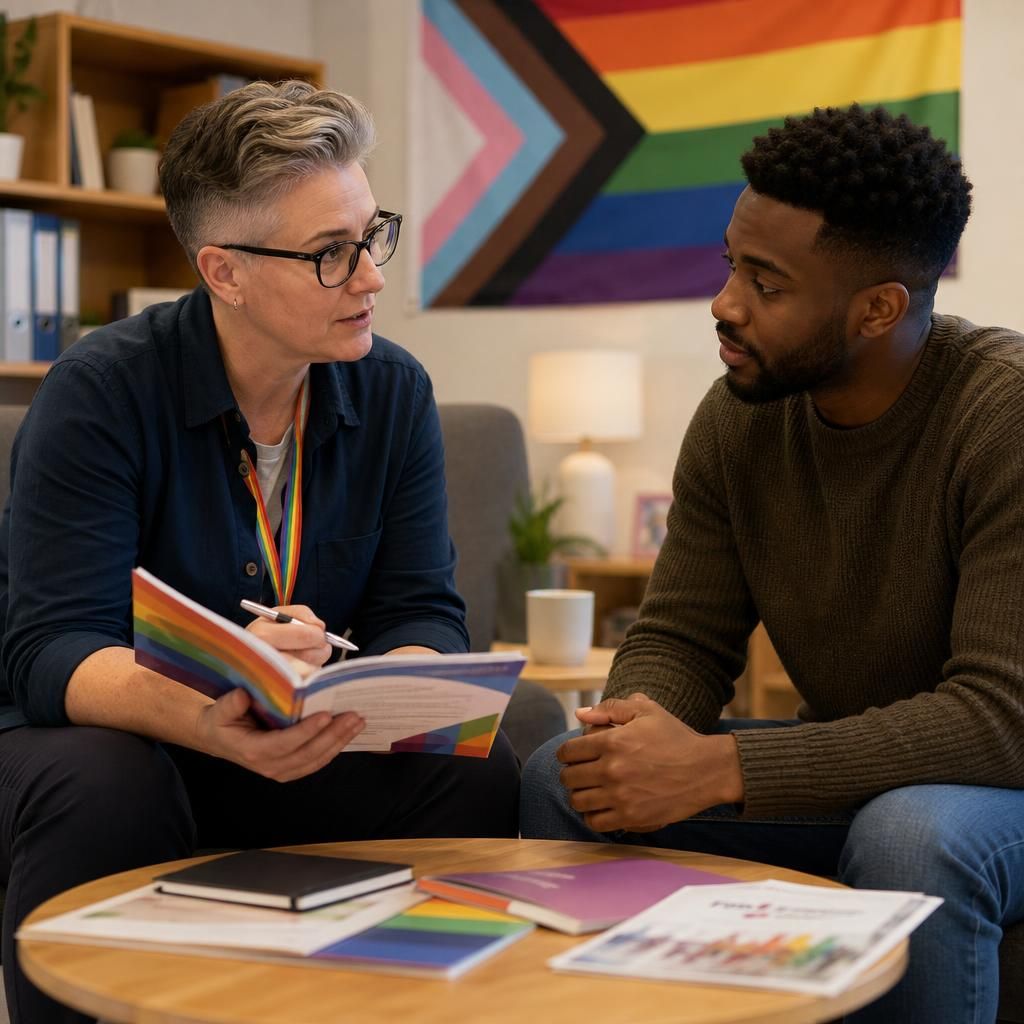
A further part of training may be a placement-specific briefing before a child arrives. This helps carers understand the young person’s preferred language, known triggers, important relationships, education arrangements and any agreed boundaries around personal information. The briefing should inform care without defining the child by their LGBTQ+ identity. Carers are expected to remain open to change, check that arrangements still reflect the young person’s wishes and raise uncertainties with the supervising social worker rather than making assumptions.
Ask about training for LGBTQ+ specialist foster care
Speak to our fostering team to ask what LGBTQ+ specialist training is included and how it fits within the application process. This will help you understand the preparation and ongoing support available before deciding whether to apply.