

What training is needed for specialist foster care?
Specialist foster carers complete preparation training before approval, covering safeguarding, trauma, attachment, behaviour and the impact of children’s experiences. Further training is then tailored to the needs of the child placed with you and continues throughout your fostering journey.
Partnering with an
Ofsted Outstanding Provider
There is no single qualification that makes someone eligible for specialist foster care. Instead, prospective carers complete a structured programme of fostering preparation, followed by training that develops the practical skills needed for the type of placement they may accept. The exact programme depends on the fostering service, the carer’s experience and the needs of the child.
Training before approval
Initial training helps applicants understand what fostering involves and decide whether it is suitable for their household. It normally covers the responsibilities of a foster carer, working with social care professionals, maintaining appropriate boundaries, keeping accurate records and contributing to plans for the child. Applicants also explore how fostering can affect family relationships, routines, privacy and existing children in the household.
Preparation also considers how carers make decisions safely. This includes understanding safer caring plans, confidentiality, information sharing, complaints procedures, allegations and the importance of reporting concerns through the correct channels. These subjects help applicants understand both the authority of a foster carer and the limits of that role.
Specialist subjects and additional modules
Once a fostering service understands the needs a carer may be able to meet, it can identify more specific learning. Depending on the placement, this may include:
- supporting children who have experienced neglect, abuse, loss or repeated changes in care;
- helping children who communicate through distressed or risky behaviour;
- recognising how neurodiversity, disability, mental health needs or developmental differences may affect daily life;
- supporting children affected by exploitation, missing episodes, substance misuse or unsafe relationships;
- administering or recording medication safely where this forms part of the agreed care plan;
- promoting healthy routines, personal care, nutrition and physical wellbeing;
- supporting identity, culture, religion, language, sexuality and relationships in an inclusive way;
- using digital devices and social media safely; and
- working with schools, health professionals, birth families and other members of the professional network.
Not every specialist foster carer needs every module. Training should be relevant to the child’s assessed needs and the carer’s responsibilities. A carer may receive a briefing before a placement if the child has a particular health condition, communication need, risk profile or care arrangement.
First aid, health and safety and practical skills
Foster carers are generally expected to complete practical learning relevant to the safety of children in their home. This may include first aid, fire safety, safe storage of medicines and hazardous items, infection prevention, food hygiene, moving and handling, and responding to accidents. The required content can differ according to the child’s age, health and level of need.
Where a child requires specialised medical care, carers should receive appropriate instruction from qualified health professionals before taking on tasks. Foster carers are not expected to make clinical decisions outside their competence. Their responsibility is to follow the agreed care plan, record relevant information and raise concerns with the appropriate professional.
Training is part of the assessment process
Completing a course is only one part of demonstrating readiness. During assessment, applicants may be asked to discuss scenarios, reflect on their responses and show how they would apply learning in everyday situations. The assessing social worker considers whether the applicant can understand information, seek advice, work with professionals and respond consistently to a child’s needs.
This means specialist training is not about memorising the right answers. It is about developing judgement. A carer needs to know when to offer reassurance, when to set a clear boundary, when to record an event and when to seek urgent help. They also need to recognise that a strategy that works for one child may not be suitable for another.
Ongoing development after approval
Training continues after approval. Foster carers usually maintain a development record and complete learning identified through supervision, reviews, placement discussions or changes in guidance. This may include refresher learning as well as new subjects arising from the children living in the home.
Learning can take different forms, including courses, workshops, online modules, group discussions, reading, supervision and reflective conversations. Practical experience is also important. After training, carers can discuss what they have observed, what has worked, what has not worked and whether the child’s plan needs to change.
The Training, Support and Development Standards for foster care provide a framework for the knowledge and skills foster carers are expected to develop. A fostering service will explain how these standards apply, what evidence is needed and how progress is reviewed. Training records may be considered during supervision and foster carer reviews.
Training is supported by professional guidance
Specialist foster carers are not expected to manage complex situations alone. Training works alongside supervision, placement planning, advice from the fostering service and input from social care, education and health professionals. Before accepting a placement, carers should ask what training is available, which skills are essential, whether any child-specific instruction will be provided and who they should contact for advice about a concern.
The most suitable preparation is therefore individual rather than identical for every carer. A person with previous experience in education, health, childcare or social care may already have useful knowledge, but the fostering service will still assess what additional learning is required. Someone without professional experience can also develop the necessary skills through training, assessment and ongoing support.
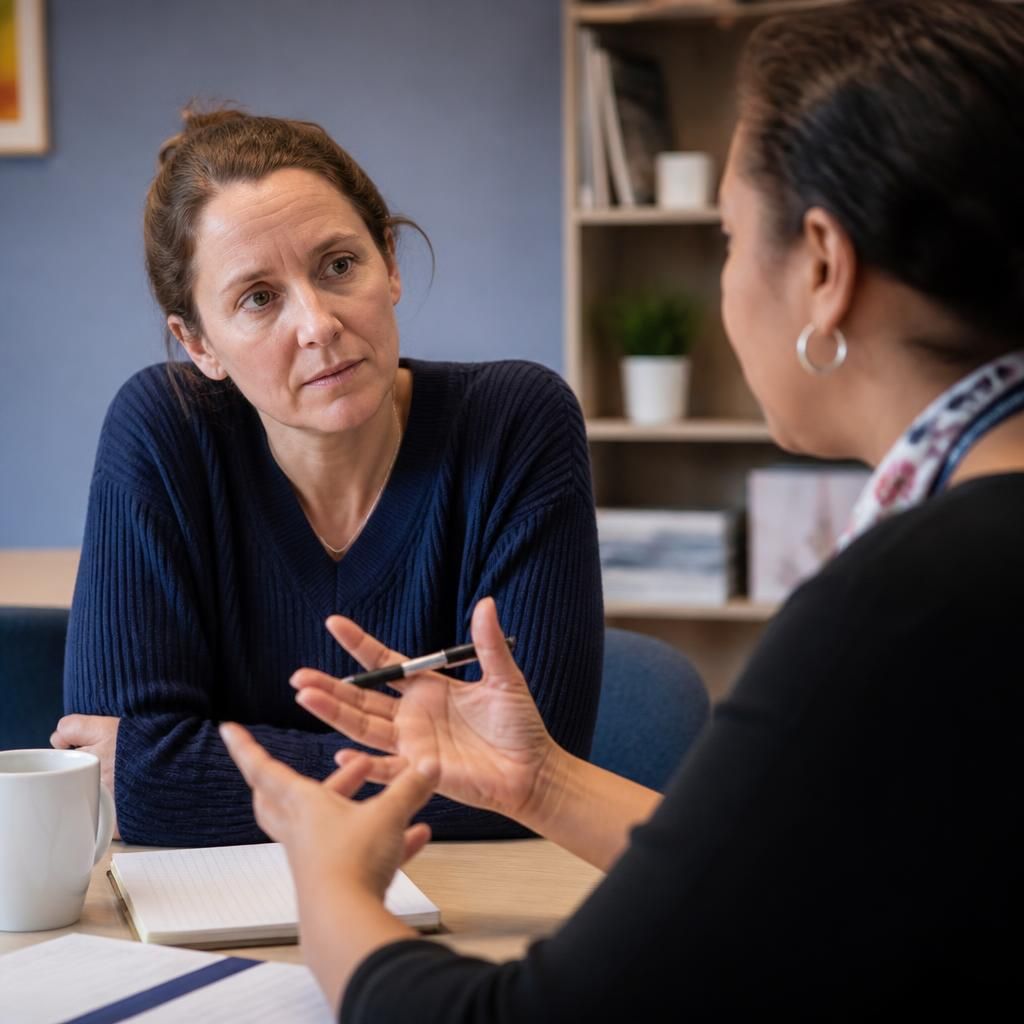
Specialist foster care training should help carers respond safely to distress without taking on responsibilities that belong to clinical or statutory professionals. It may cover how to recognise early signs of escalation, reduce conflict, use agreed de-escalation strategies and follow a child’s individual safety plan.
The aim is to provide consistent care in everyday situations, such as difficult transitions, contact arrangements, changes to routine or heightened anxiety. Foster carers use the approaches agreed with the professional network, observe how the child responds and share relevant information so that support can be reviewed when needed. They do not diagnose conditions or provide treatment unless they have the appropriate professional role and instruction.
Find out more about specialist foster care training
If you are considering specialist foster care, speak with our fostering team about the preparation and development pathway relevant to your experience and the children you may support. This will help you understand the next steps before deciding whether to apply.