
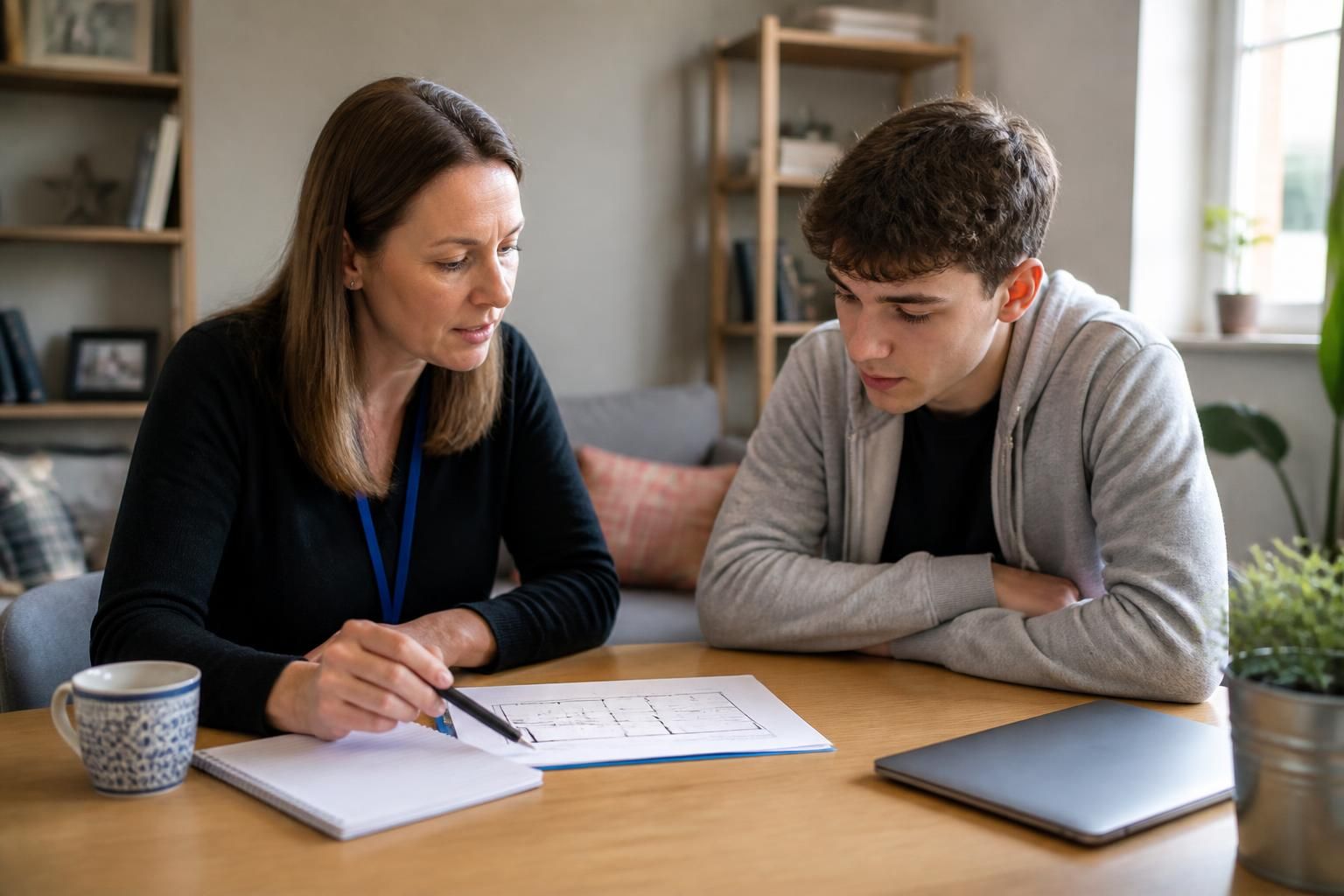
How are move-on plans prepared in supported lodgings?
Move-on plans in supported lodgings are prepared jointly with the young person and their support team, based on their needs, strengths and readiness for greater independence. The plan sets practical goals, identifies the guidance and resources needed, and is reviewed as circumstances change so the next step is appropriate and realistic.
Partnering with an
Ofsted Outstanding Provider
A move-on plan is normally developed as a practical transition document that records what the young person needs to arrange, practise and understand before leaving supported lodgings. It links the proposed next accommodation with the skills, finances, services and safeguards needed to make that move suitable rather than treating it as simply a change of address.
Preparation starts with understanding the young person’s circumstances. The support worker will usually consider their current accommodation, legal or care status, education or employment, health, relationships, income, daily living skills and any risks that could affect a move. The young person’s own preferences are central. For example, they may want to remain near college, move closer to family, share with others or live independently. These preferences are considered alongside what accommodation is realistically available and safe.
The plan should also reflect information from the professionals involved. Depending on the young person’s circumstances, this may include a personal adviser, social worker, education or training provider, housing worker, health professional or benefits adviser. The supported lodgings host can provide useful observations about routines and progress, but the young person should be able to express their views privately and should understand who is contributing information and why.
The intended next step is then identified. This might be a council or housing association tenancy, shared accommodation, specialist supported housing, university accommodation, accommodation with family or another arrangement. The suitability of each option is considered carefully. Factors can include affordability, location, condition of the property, level of support, tenancy responsibilities, transport, access to education or work, and whether the arrangement can meet any health, disability or safety needs.
A good plan breaks the transition into specific areas rather than using a general statement that the young person is ready to leave. It may cover:
- finding and applying for appropriate accommodation;
- understanding a tenancy or licence, including rent, deposits, bills, repairs and conduct requirements;
- claiming relevant income or housing support and managing money;
- cooking, shopping, cleaning, laundry and maintaining a safe home;
- using public transport and attending appointments;
- continuing education, training or employment;
- registering with health services and obtaining medication or other support;
- maintaining positive relationships and identifying trusted people to contact;
- recognising risks such as exploitation, substance misuse, unsafe visitors or rent arrears; and
- knowing how to seek help if the arrangement becomes difficult.
Each area should state what needs to happen, who will help, and how progress will be recognised. Instead of writing that a young person needs to improve budgeting, the plan might record that they will prepare a weekly budget, check their account, pay an agreed household contribution and ask for advice before missing a payment. This makes the preparation easier to monitor and allows support to be adjusted when a task proves more difficult than expected.
Practical preparation is usually carried out before the move. This can include looking at possible properties, completing forms, visiting accommodation, practising journeys, preparing a first-week budget, gathering identification and checking what furniture or household items are required. The young person may also need help to understand correspondence, arrange utilities, set up payments and learn how to report repairs. Where another service will provide support after the move, introductions and information-sharing arrangements should be agreed in advance.
Readiness is not judged only by whether the young person can complete every task without help. The relevant question is whether the proposed accommodation has the right level of support and whether there is a safe way to obtain assistance when needed. A young person may be able to move with some continuing help, while another may need a gradual transition, further practice or a different type of accommodation.
The plan includes review points and contingency arrangements. It should be revisited if the housing offer changes, the young person’s health or finances alter, education or employment ends, risks increase, or the proposed support is no longer available. If the first option falls through, the plan should identify who will help find an alternative and where the young person can stay safely while arrangements are reconsidered. This avoids making a move based on an unsuitable or uncertain offer.
Before the move, the young person should be given the opportunity to check that the plan accurately reflects their views and that they understand the agreed actions. Copies or relevant information may be shared with the people responsible for delivering support, in line with confidentiality and safeguarding requirements. After the move, agreed follow-up helps identify problems early, such as difficulty paying bills, isolation, unsafe conditions or confusion about tenancy responsibilities, so that further advice can be considered.
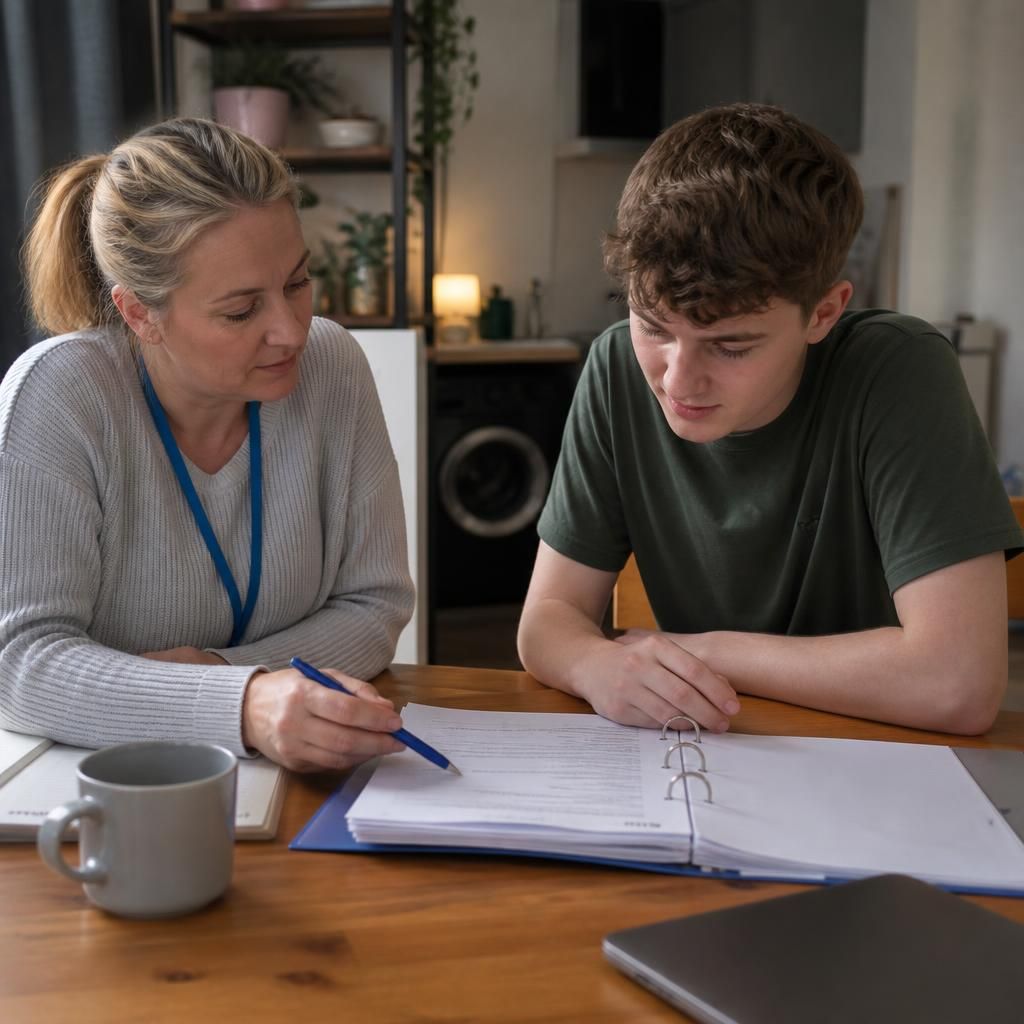
A move-on plan should also prepare the young person for the change in day-to-day relationships, not only the practical arrangements for accommodation. Moving from supported lodgings can mean spending less time with the host and taking more responsibility for decisions, routines and contact with services.
The young person and support team can discuss which relationships they want to maintain, how contact with the host or other trusted adults will work, and who they can approach when they feel uncertain. They can also agree how personal belongings, keys, records and important contact details will be managed. Recording these points in the plan helps prevent misunderstandings and gives the young person a clear source of reassurance during the transition.
This part of the plan should reflect the young person’s preferences and any safeguarding considerations. It can be revisited before the move if relationships change or the young person becomes concerned about managing the transition.
Discuss move-on planning in supported lodgings
If you are considering supported lodgings and would like to understand how move-on planning works, speak to our team for clear guidance about the host role and ongoing support.